Pakistan’s auto sector witnessing increased investment
June 3, 2026
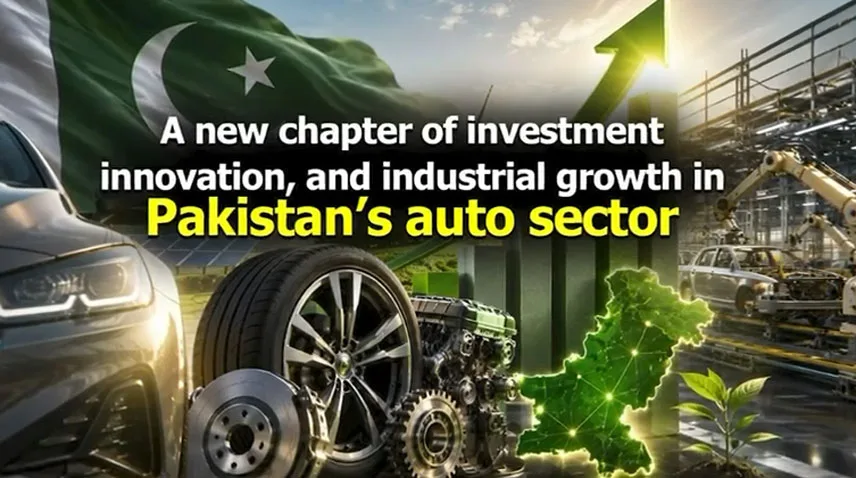
Pakistan’s automobile industry is on the verge of a major transformation, with electric and hybrid vehicles set to dominate new model launches in the second half of 2026.
ISLAMABAD: Pakistan’s automobile industry is on the verge of a major transformation, with electric and hybrid vehicles set to dominate new model launches in the second half of 2026. Despite lingering concerns over charging infrastructure, affordability and energy supply, automakers appear increasingly confident about the future of new-energy vehicles in the country.
According to industry data compiled by brokerage firm Arif Habib Limited, approximately 23 new vehicle models are scheduled to enter the Pakistani market between June and December this year. A striking majority of these launches will feature electrified powertrains, signaling a significant shift away from traditional petrol-powered vehicles.
Of the planned introductions, nine are fully electric vehicles (EVs), while 11 belong to the plug-in hybrid electric vehicle (PHEV) or range-extended electric vehicle (REEV) categories. Only three upcoming models will rely solely on conventional internal combustion engines (ICE), highlighting the industry’s accelerating transition toward cleaner mobility solutions.
Market analysts view the figures as evidence of a structural change in Pakistan’s automotive landscape, with nearly 87 percent of the upcoming models incorporating some form of electrification. The trend also underscores the growing influence of Chinese automakers, which are spearheading the transition through strategic partnerships with local assemblers and distributors.
Recent market activity has already reflected this momentum. New launches such as GAC’s Aion V and Aion UT have expanded the country’s EV offerings, while several additional models are expected to arrive across a wide range of vehicle segments and price categories in the coming months.
The rollout schedule begins in June with seven anticipated launches. These include the petrol-powered Changan UNI-S, Jetour T1 and Jetour T2, alongside hybrid offerings such as the GWM Cannon Alpha and Omoda C7. MG is also expected to introduce two fully electric models, the IM5 and IM6, during the month.
July is projected to witness the arrival of four electrified vehicles, including the Jaecoo J8 plug-in hybrid, Nevo Q05 REEV, Deepal G318 REEV and the all-electric Nevo A06. August’s lineup is expected to feature the Ora 03 EV, Deepal Hunter K50 REEV and Avatr 11 EV.
Further additions are planned for September, when the Chery QQ3 electric hatchback and Deepal S09 REEV are scheduled to enter the market. October is likely to see the launch of the compact Changan Lumin EV, while December is expected to conclude the year with a strong batch of six new models, including the Denza B5, Denza B8, BYD Sealion 6, Nevo Q07, Avatr 07 and Aion ES.
Industry experts believe the increasing number of launches demonstrates growing confidence among manufacturers that Pakistani consumers are becoming more receptive to electric and hybrid technologies. The diversification of vehicle categories—from hatchbacks and sedans to SUVs and pickup trucks—suggests that automakers are targeting a broader customer base than ever before.
Chinese automotive companies have emerged as the driving force behind this transition. Brands including BYD, GAC, Changan, Deepal, Avatr, Denza, Ora, Omoda and Jaecoo are rapidly expanding their footprint in Pakistan through local partnerships and assembly operations.
Automobile analyst and consultant Shafiq Ahmed Shaikh said the ongoing shift is closely linked to policy reforms introduced under the Auto Industry Development and Export Policy (AIDEP) 2021-26 and is expected to gain further momentum under the upcoming Auto Policy 2026-31.
According to him, both established and newly entering automakers are redirecting investment toward electric, hybrid and battery-powered technologies while gradually reducing their focus on conventional fuel-powered vehicles. Several Chinese manufacturers are also investing in local assembly facilities to strengthen their long-term presence in the Pakistani market.
Experts argue that the government’s push for vehicle electrification is not only environmentally driven but also linked to broader economic goals. Pakistan spends billions of dollars annually on importing crude oil and liquefied natural gas, placing significant pressure on foreign exchange reserves. Policymakers hope that greater adoption of electric mobility will help reduce the country’s dependence on imported fuels and improve energy security.
To support the transition, the government has introduced incentives for EV manufacturers and assemblers. These include a reduced customs duty of one percent on EV-specific completely knocked-down (CKD) parts and a concessional one percent sales tax on locally produced electric vehicles equipped with batteries below 50 kilowatt-hours.
Industry stakeholders also anticipate increased localisation of parts and components as production volumes rise. Analysts believe that expanding local manufacturing capabilities could help lower vehicle prices, create employment opportunities and strengthen Pakistan’s automotive supply chain.
The sector is aiming to boost annual vehicle production beyond 500,000 units by the end of the decade, while also exploring export opportunities through locally assembled right-hand-drive vehicles. Industry representatives estimate that automotive exports could eventually generate up to $1 billion in annual revenue.
However, significant challenges remain. The availability of charging stations across the country remains limited, while high purchase costs continue to discourage many potential buyers. Consumer awareness and confidence in new technologies are also evolving gradually.
To overcome these barriers, automakers and their partners are investing in charging infrastructure, after-sales support networks and financing solutions designed to make electric mobility more accessible to a wider segment of consumers. As these efforts gather pace, Pakistan’s automotive sector appears set to enter a new era defined increasingly by electric and hybrid transportation.